


Frizz happens when the hair cuticle lifts and lets moisture move in and out of the strand unevenly. Each hair swells and springs out of alignment. The main culprits: dryness, friction, and structural damage. Fix the right one and the frizz settles down.
Most advice on how to fix frizzy hair skips that diagnosis and jumps straight to products. This guide does it in order: identify which type of frizz you have, then match it to the wash, drying, styling, and sleep habits that fix it. Our frizz solutions collection covers every step in that routine.

What Causes Frizzy Hair
Every strand of hair is wrapped in a cuticle, an outer layer of overlapping scales. When those scales lie flat, hair looks smooth and reflects light. When they lift, moisture from the air enters the hair shaft and swells the strand, and each hair dries into its own direction instead of lining up with its neighbors.
Four things lift the cuticle: dryness, humidity, friction, and damage. Dry hair pulls water from the air. Friction from towels, pillowcases, and brushing roughs up the scales. Heat and chemical damage chips them permanently.
Frizz is not a hair type, and it is not always damage. Perfectly healthy hair frizzes. Fine, straight hair gets a halo of flyaways. Wavy and curly hair puffs and loses definition. Coily hair frizzes mostly from dryness. Same mechanism, different look.
Dryness vs. Damage vs. Humidity
Dryness frizz means your hair is thirsty and pulling moisture from the air. It shows up worst on the ends, feels rough or straw-like, and improves fast with conditioning. This is the most common type and the easiest to fix.
Damage frizz comes from a chipped cuticle. Heat styling, bleach, and friction wear the scales away, usually from the mid-lengths down. Hydration alone will not resolve it, and it travels with split ends and breakage.
Humidity frizz is chemistry. Water in the air reacts with the hair itself, so it appears within minutes of stepping outside, no matter how well you styled.
On damp hair: rough, tangly ends that soften with conditioner point to dryness. Gummy or stretchy sections when wet point to damage. Hair that behaves indoors and revolts outdoors points to humidity.
Can frizzy hair be fixed? Yes. Frizz from dryness, friction, and humidity can be managed to the point where you rarely see it. Damage is different: once the cuticle chips, it cannot be reversed, only trimmed out and prevented going forward.
How to Diagnose Your Frizz Before Fixing It
Three quick self-checks tell you where your frizz starts, and each one maps to a different fix path below.
1) The Porosity Check
Hair porosity describes how quickly your cuticle lets water in and out. High porosity hair absorbs water fast, dries fast, and frizzes constantly, because the open cuticle leaks moisture as quickly as it drinks it. It needs sealing products and heavier leave-ins.
Low porosity hair resists water. Products sit on top instead of absorbing, so it frizzes from buildup and under-conditioning. It needs lightweight layers and a little warmth to help conditioner penetrate.
Two tests can point you in the right direction. Drop a clean, shed strand in a glass of water: sinking fast suggests high porosity; floating suggests low. Or spritz dry hair with water and watch whether droplets absorb quickly or bead up.
A week of paying attention beats any single test. Notice how fast your hair dries and how it responds to product. The answer tells you a product weight, not a product name.
2) The Timing Check
When your frizz appears tells you where in your routine it starts. If frizz appears right after washing, the fix is your towel. If it shows up as your hair dries, the fix is your drying method. If it creeps in midday, the fix is hold. If you wake up with it, the fix is your pillowcase.
Run through a normal day and note the moment your hair goes from smooth to frizzy. That moment is your entry point into the routine sections below.
3) Environmental and Water Factors
Humidity is the biggest variable you cannot control, and dew point matters more than temperature. A muggy 70-degree day frizzes hair harder than a dry 90-degree one.
Winter flips the problem. Dry indoor air and heating create static frizz, where strands repel each other instead of clumping. That calls for less product weight and more attention to friction and fabric.
Hard water adds a third factor. Minerals in the water, especially magnesium, deposit on the hair surface and roughen the cuticle, which blocks conditioner from doing its job. These are modifiers, though. For most people, the root cause is in the routine itself.
The Wash Routine That Prevents Frizz
Most frizz is created before styling ever begins. Every step of wash day is either a friction decision or a moisture decision, and small changes here do more than any finishing product.
1) Washing Frequency and Water Temperature
Over-washing strips sebum, the natural oil that acts as your cuticle's built-in sealant. Under-washing leaves buildup that blocks moisture from getting in. The right frequency depends on your texture and scalp: oily, fine hair may need washing every day or two, while curly and coily hair often does best with once or twice a week.
Wash your scalp, condition your ends. The scalp produces the oil and the buildup; the ends carry the dryness and the damage. Treating them the same is how ends get stripped.
Water temperature matters more than most people expect. Hot water lifts the cuticle. Wash lukewarm, then finish with a cool rinse to help the cuticle lie flat.
Your cleanser format counts here too. Sulfate-free shampoo and gentle surfactants clean without stripping natural oils, which is exactly the balance frizz-prone hair needs. Our shampoo and conditioner bars are built on that low-stripping chemistry. If you are new to the format, our shampoo bar beginner guide covers technique and water temperature in depth.
Struggling with grease rebound from washing too often? Our oily scalp guide explains that mechanism and how to break the cycle.

2) Conditioning and Weekly Treatments
Conditioner does mechanical work, not just softening. It smooths and flattens the cuticle so strands lie in the same direction and hold their moisture. Skipping it, or applying it only to the top layer, leaves the cuticle open.
Detangle in the shower with conditioner in your hair, using fingers or a wide-tooth comb. Wet hair is more fragile than dry hair, but conditioner gives the comb slip. Never detangle dry hair after the shower, when the cuticle has already set.
Add a deep conditioner on a schedule that matches your porosity: weekly for high porosity or heat-styled hair, every other week or lighter for low porosity. Our Moisturizing Coconut Oil Deep Conditioning Mask fits this tier, and coconut oil has been shown to reduce protein loss in both damaged and undamaged hair when used as a treatment.

3) Towel Drying Without Friction
The single most common frizz mistake is rubbing your hair with a terry cloth towel. Those loops physically lift and rough up the cuticle while your hair is at its most fragile.
Squeeze and blot instead. Never rub, and never twist aggressively. A microfiber towel or a cotton T-shirt cuts the friction, and microfiber also shortens drying time, which reduces the heat exposure that comes next.
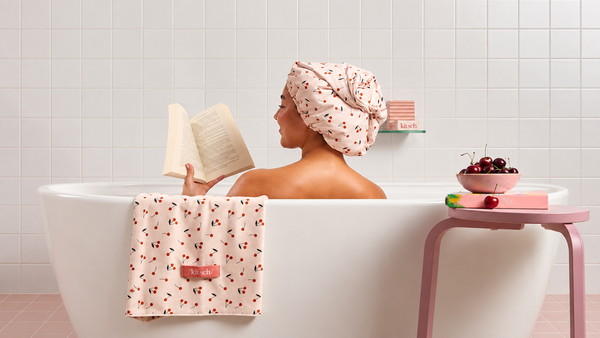
For longer or thicker hair, standard wraps slip and unravel. We sized our Extra Large Quick Dry Hair Towel Wrap for exactly that problem. The full hair towels collection covers other lengths and formats.
Drying Methods and Frizz Control
How you dry your hair determines your outcome more than which products you buy. Air drying, blow drying, and heatless styling can each be frizz-free or frizz-making depending on technique.

1) Air Drying Without Frizz
Apply your product to soaking-wet hair, not damp hair. Product distributes evenly through wet strands and locks in before the cuticle sets. Wait until damp and you are sealing frizz in rather than sealing it out.
Then follow the hands-off rule. Touching, scrunching, and flipping your hair while it air dries is what creates frizz in air-dried hair. Section it, clip it loosely, or plop it for wave definition, then leave it alone until fully dry.
A smoothing cream made for this step keeps the cast light. Our Smoothing Air Dry Cream is a lightweight leave-in built for exactly this soaking-wet application.

2) Blow Drying Without Frizz
Rough-dry to about 80 percent before a brush ever touches your hair. Brushing soaking-wet hair stretches and snaps strands, and it guarantees frizz. Use the nozzle attachment, point the airflow down the hair shaft, and finish each section with the cool shot to close the cuticle.
Heat protectant is non-negotiable, and a light mist like our Heat Protectant Styling Mist goes on before the dryer, not after. Realistic temperature guidance: medium heat with steady motion beats high heat parked in one spot.
For smoothness, work in sections no wider than your round brush, keeping light, even tension from roots to ends.

3) Heatless Styling as a Frizz Strategy
Removing heat removes one damage input, but heatless methods carry their own friction risk if you use the wrong material or the wrong hair state. A rough fabric rod dragged through dry hair creates the frizz it was supposed to prevent.
The rules: style on damp hair, not wet or dry. Choose satin-covered rods over bare fabric or elastic, since satin lets hair slide instead of snag. Secure without tension. Our Satin Heatless Curling Set and the wider heatless hair collection are built around that low-friction principle.

How to Stop Frizz in Humidity
Hydration is your humidity defense. Humid air donates moisture to under-hydrated hair, and dry, thirsty strands absorb it fastest. Well-hydrated hair has little room left to absorb, so it swells less.
The chemistry backs this up. Water in humid air forms and breaks hydrogen bonds inside the hair's keratin, and a raised or damaged cuticle lets more of that water in, swelling the strand and undoing your style.
So the fix is layering, in order. Leave-in conditioner first for hydration. A cream or oil second to seal it. A hold or barrier product last, on the outside, where the humid air actually makes contact.
That last layer is its own category. Anti-humidity sprays form a film that blocks airborne moisture, which is different work than a smoothing cream does. Our Humidity-Blocking Frizz Shield Spray is the barrier tier of the routine.
Adjust by season using dew point as your guide. Above 60 degrees, layer fully. In dry winter air, cut the product weight and shift your attention to friction and fabric, because static is the inverse problem.
Same-Day Fixes for Frizz and Flyaways
Sometimes you need frizz gone in five minutes, not fixed at the root. These tactics buy you hours. They are rescues, not routine.
Warm two or three drops of a shine serum between your palms until fully emulsified, then press through dry mid-lengths and ends. Never apply at the root. Our Glass Hair Shine Serum is made for this dry-hair pass.
The hairline halo and baby hairs are a separate problem from body frizz, and they need a different tool. A taming stick like our Styling & Taming Wand smooths them flat without stiffness.
For a single unruly section, re-wet it with damp hands and smooth it down rather than re-washing. And if the frizz wins anyway, redirect the style honestly: a low bun, a loose braid, or a claw-clip twist hides frizz without creasing your hair.
One over-correction to avoid: piling more product onto dry frizz. It goes greasy and stiff without ever closing the cuticle.
Overnight Habits That Reduce Morning Frizz
Sleep is the longest single friction exposure in your entire routine. A cotton pillowcase absorbs moisture from your hair and drags against it for roughly eight hours a night.
Satin and silk both cut that friction and moisture loss. The practical difference: silk is a fiber, satin is a weave. Silk typically costs several times more, while satin delivers the same smooth, low-friction surface at a lower price. Both work. Our Satin Pillowcase is OEKO-TEX certified, and the full pillowcase collection covers sizes and colorways.
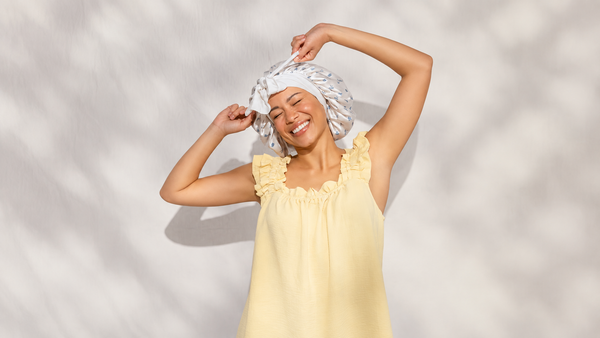
Set your hair up for the night too. A loose pineapple, braid, or bun keeps strands from tangling, secured with a fabric-covered tie rather than a bare elastic. For longer or curlier hair that shifts off a pillowcase overnight, a satin bonnet holds everything in place. Our Adjustable Oversized Satin Bonnet fits high-volume and protective styles.
And never sleep on soaking-wet hair. Wet strands are at their weakest, and eight hours of pressure and friction on them is a recipe for breakage and morning frizz.
When Frizz Signals Damage
Stop layering products when you see these signs: splits along the mid-shaft, a gummy texture when wet, breakage at a consistent length, or sections that no longer hold any style. That is damage frizz, and the usual culprits are bleach, high heat, and chemical straightening.
What helps: regular trims to remove split ends, bond-building treatments that improve the look and feel of damaged lengths, cutting back on heat, and balancing protein with moisture. Too much protein can leave hair brittle. Our rice water and hydrolyzed protein guide covers how to strike that balance.
In-salon smoothing treatments coat or restructure the cuticle surface to reduce frizz for roughly two to five months depending on the treatment type. The trade-offs are cost, upkeep, and in some formulas, harsh ingredients. Know what a given treatment uses before booking.
Set a realistic timeline either way. Cuticle condition improves over weeks of consistent routine, not one wash.
Start With the Diagnosis, Not the Products
Frizz has a cause, and the cause picks the fix. Run the porosity check and the timing check this week, then change the one step your frizz points to: the towel, the drying method, the humidity barrier, or the pillowcase.
Build from there, one swap at a time. A routine matched to your hair's actual behavior will outperform a shelf of products chosen at random, every time.